Glass Fiber vs Mineral Filled PPS: Which One Fits Your Part?
Glass fiber PPS is stiffer and stronger but warps more easily. Mineral filled PPS stays flatter and holds dimensions better in precision thin-wall parts. Here is how to choose.
PPS is the resin engineers reach for when a part must survive heat, chemicals and tight tolerances at the same time. But "PPS" on a drawing is only half the specification — the filler system decides how the part actually behaves. The two mainstream choices are glass fiber reinforcement and mineral filling (including glass + mineral hybrids). The core difference is simple: glass fiber PPS is stiffer and stronger, but more prone to warpage; mineral filled PPS is flatter and more dimensionally stable, which makes it the better fit for precision thin-wall parts.
Glass fiber PPS: strength first
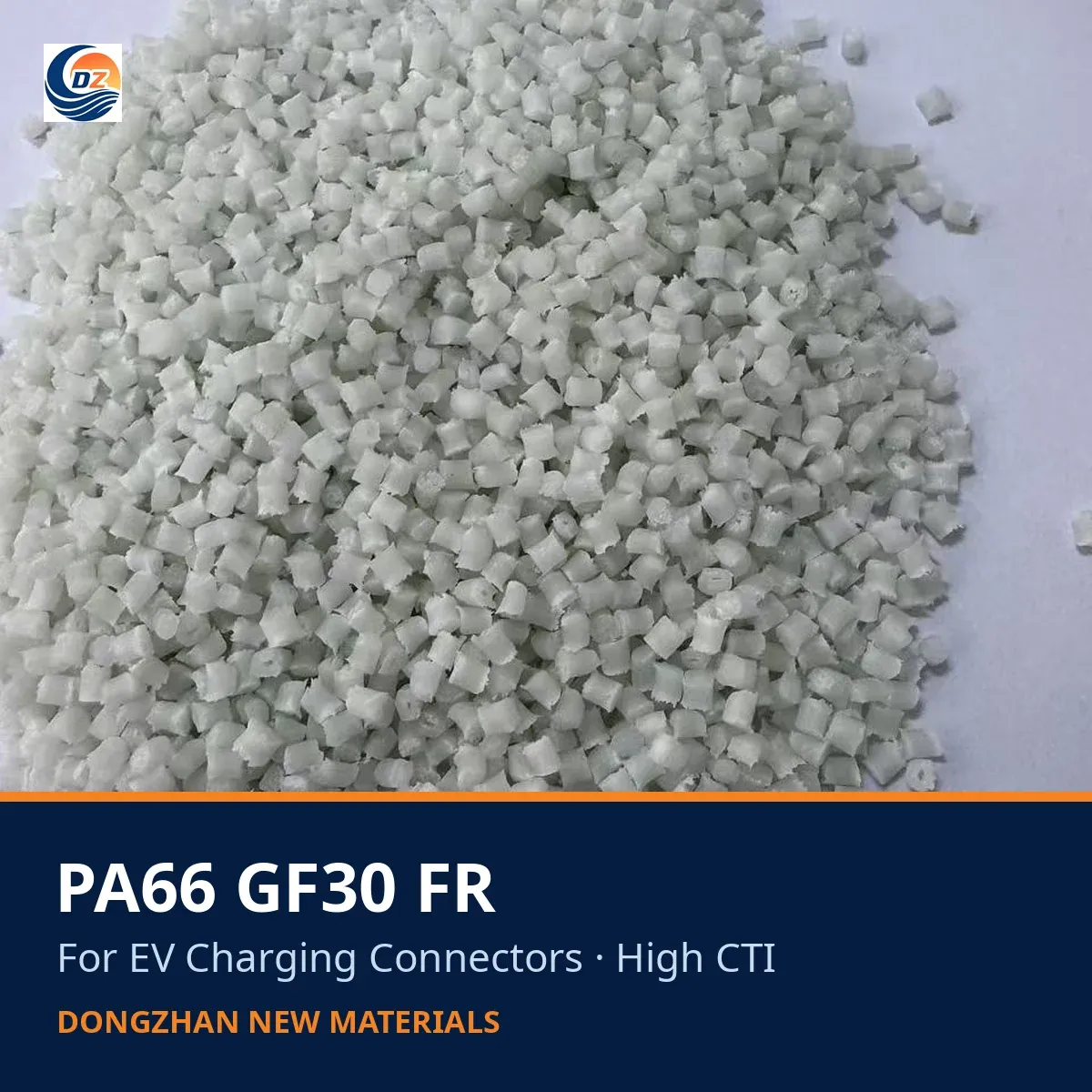
Glass fibers align with the melt flow direction as the part fills. That orientation is what delivers the high tensile strength, stiffness and heat resistance PPS GF grades are known for — and it is also their weakness: shrinkage differs along and across the flow direction, so large, flat parts can warp as they cool. The higher the glass content, the stiffer and stronger the compound — and the stronger the directional behavior.
Mineral filled PPS: flatness first
Mineral fillers are plate-like particles that do not orient the way fibers do. Shrinkage stays closer in all directions, so parts come out flatter, with better dimensional stability and surface quality on large planes. The trade-off is mechanical: at the same filler loading, tensile strength, stiffness and impact performance are usually lower than a pure glass fiber grade.
The hybrid middle ground
Many commercial PPS grades combine glass fiber with mineral filler. The glass provides the structural strength; the mineral calms the shrinkage difference between directions. For parts that need both respectable strength and controlled warpage, a GF + mineral compound is often the practical answer rather than an either/or choice.
How to choose
- Thin-wall, large flat parts with tight assembly dimensions — pump housings, coil bobbins, connectors: start with a low-warpage mineral filled or hybrid grade.
- Clips, brackets and load-bearing structures that need maximum stiffness: start with a glass fiber grade.
- A bit of both: ask for a glass + mineral hybrid and validate warpage on trial parts.
Filler ratio matters as much as filler type: more glass generally means more stiffness and strength, but also more directional deformation. Always check the shrinkage and warpage data for the specific grade, and mold trial parts before freezing the design.
Our PPS range
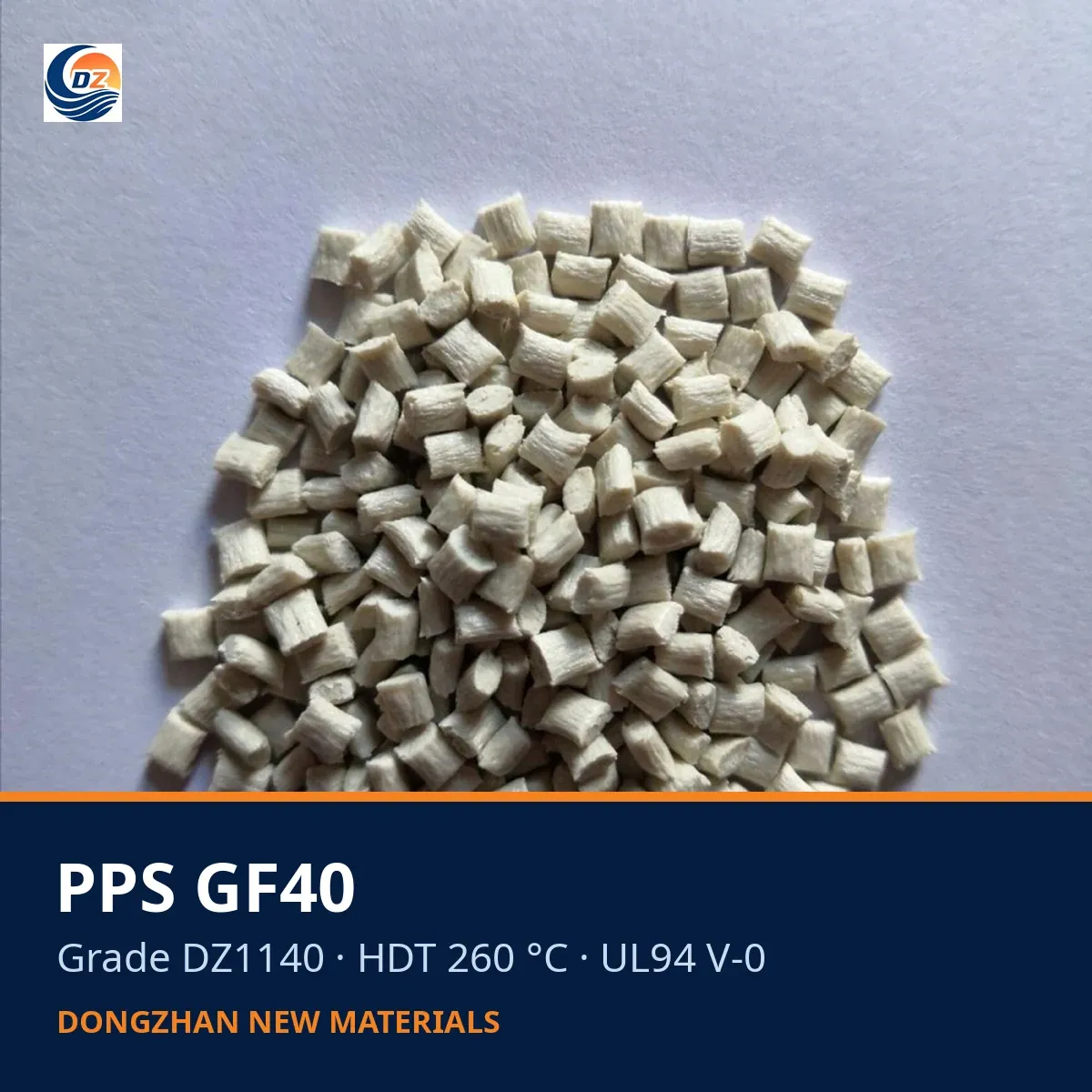
Dongzhan New Materials supplies glass fiber reinforced PPS compounds — including a GF40 high-CTI grade for precision electronics and battery brackets, and GF30 grades for electrical fittings — with custom compounding available for specific warpage or strength targets. Samples start from 5 kg; send us your drawing or current grade and we will recommend a compound with the full TDS.
FAQ
Q: Why did our flat PPS cover warp after molding?
A: If it is a glass fiber grade, directional shrinkage is the usual cause. Options include gate redesign, a lower glass content, or switching to a mineral filled or hybrid grade for that part.
Q: Is mineral filled PPS weaker in every way?
A: Its strength, stiffness and impact are typically lower than a glass fiber grade at the same loading — but for flat precision parts, the warpage it avoids often matters more than the strength it gives up.