Material Selection for EV Charging Connectors and Solar Junction Boxes
EV charging guns and solar junction boxes punish materials with heat, UV, moisture and voltage. Here is the property checklist your compound must pass.
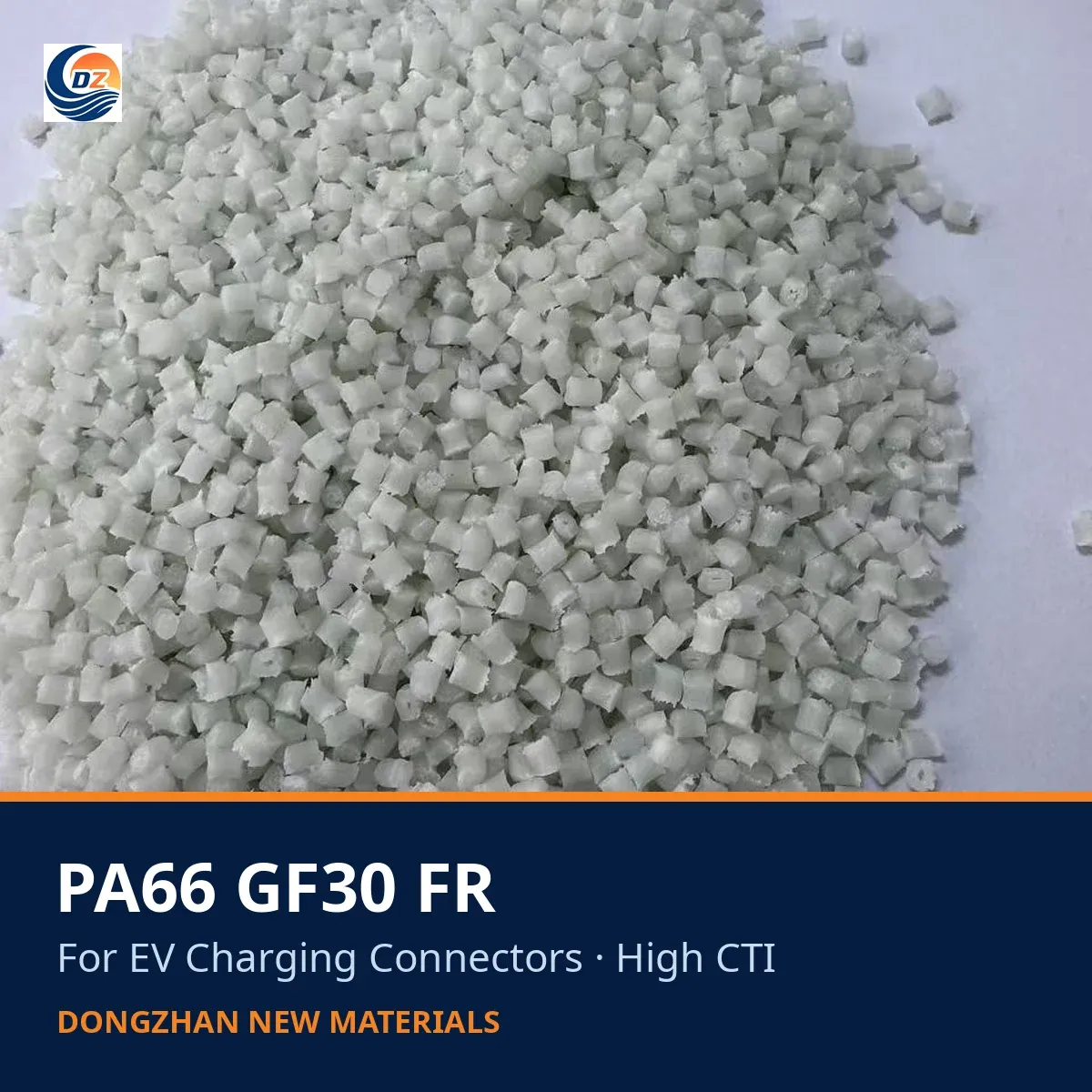
Charging connectors and photovoltaic junction boxes live outdoors, carry current, and are expected to survive a decade or more. Material failures here are not cosmetic — they are safety and warranty events. This checklist covers what to specify when you source compounds for these parts.
- Flame retardancy at real wall thickness
Specify UL94 V-0 at the thinnest wall of the housing, not the nominal one. For solar junction boxes and charging equipment, halogen-free flame-retardant systems are the mainstream choice because they combine V-0 with high tracking resistance and low smoke.
- Tracking resistance (CTI)
Outdoor electrical parts face moisture and dust on live surfaces. A high CTI compound resists carbon tracking and short circuits. For demanding designs, buyers specify CTI up to 600 V class materials. Always ask for the CTI value of the specific grade, measured on the actual compound — not the base resin.
- UV and weathering for solar parts
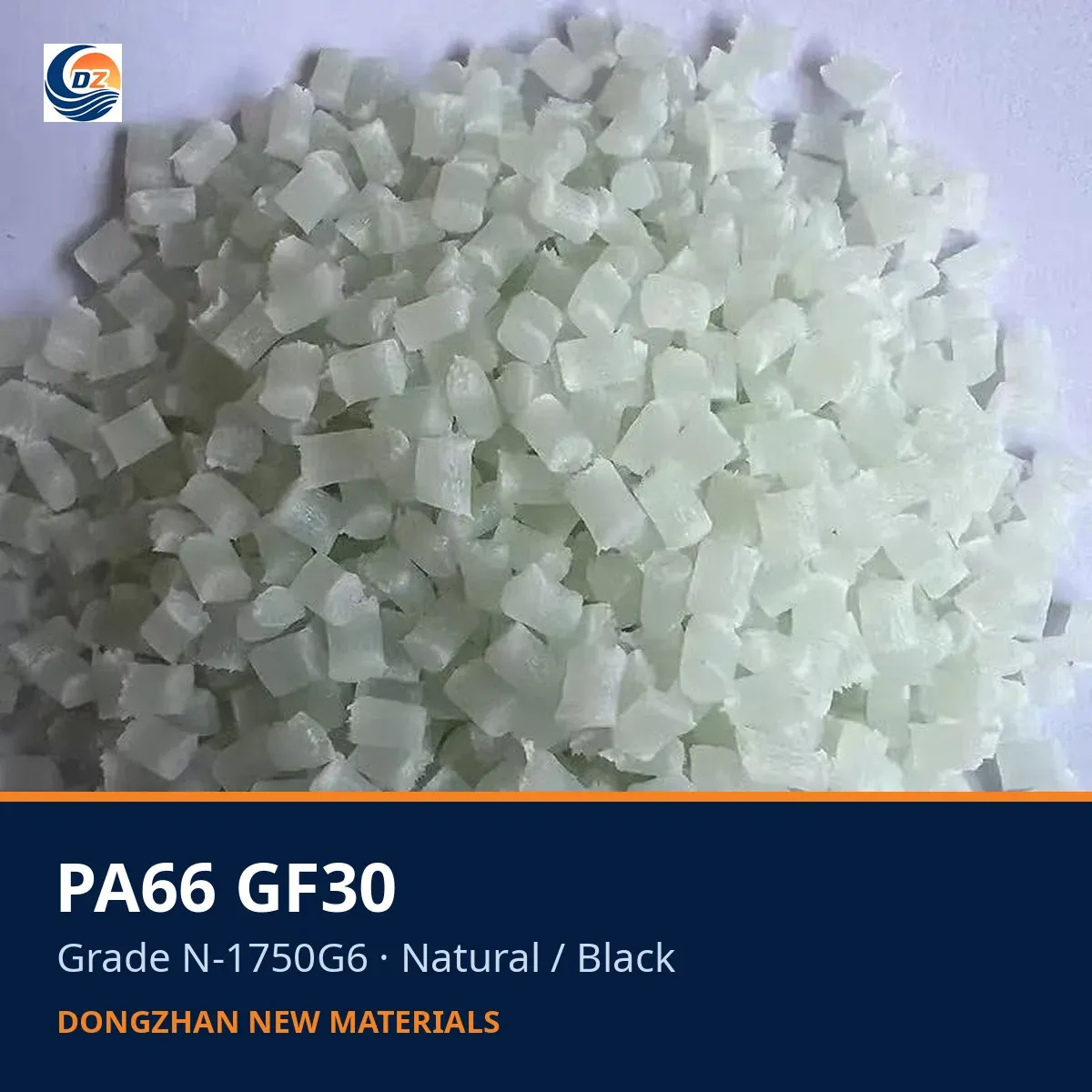
Junction box housings and connector shells sit in full sun. The compound needs UV stabilization that survives long-term exposure without chalking or embrittlement. A weather-resistant, halogen-free flame-retardant PA66 GF30 is a typical specification for solar connectors and junction box housings; typical reference values for such grades include tensile strength around 165 MPa, flexural modulus around 8800 MPa and HDT around 240 °C (reference values — request the grade's TDS to confirm the figures for your project).
- Cold and heat cycling for charging guns
Charging guns are dropped in winter and bake in summer sun. The compound must keep impact strength at low temperature (toughened, cold-resistant PA66 GF30 grades are made for this) and hold stiffness when the connector heats under load. Check the low-temperature impact data and HDT in the TDS, and mold trial parts for drop tests before mass production.
- Dimensional stability and sealing
Both applications rely on gaskets and precise latch geometry. Glass-filled nylon gives the stiffness and low creep these parts need; moisture absorption must be accounted for in tolerance design. Ask for shrinkage and water absorption data with the TDS.
A sourcing checklist you can copy into your inquiry
UL94 rating and the wall thickness it applies to
CTI value (V)
UV/weathering requirement and expected service life
Service temperature range, including low-temperature impact
Glass fiber content and color (outdoor parts are usually black)
Documents: TDS, RoHS — available on request
Sample policy: our stock samples start from 5 kg and ship within 1–3 working days; custom compounding trials start from 5 kg with a 10–20 working day lead time after specifications are confirmed
Compounds we supply for these applications
Dongzhan New Materials supplies flame-retardant PA66 GF30 grades for EV charging guns and electronics, and weather-resistant halogen-free PA66 GF30 for solar connectors and junction box housings, alongside PC/ABS and PBT options for connector housings. Send us your specification or the grade you currently use, and we will match it with data.
FAQ
Q: PA66 or PBT for a solar junction box?
A: Both are used. PA66 GF30 offers higher strength and heat margin; PBT offers lower moisture uptake. The deciding factors are usually the CTI requirement, the certification file you are building on, and cost.
Q: Can one compound serve both the charging gun shell and internal parts?
A: The shell needs impact and weathering performance; internal parts prioritize electrical properties and heat. Most projects use two grades — ask us and we will propose a matched pair.